
How can even a small municipality prepare for heatwaves, droughts, and floods before they happen? The answer comes from Ferla, Sicily, which, thanks to the URWAN (Urban Regenerative Water Avant-garde(N)) project, is at the forefront of climate planning. Through the collaboration between SVI.MED. and the company Kassandra, an innovative Integrated Decision Support System (IDSS) has been developed, transforming complex data into operational tools for the administration and its citizens.
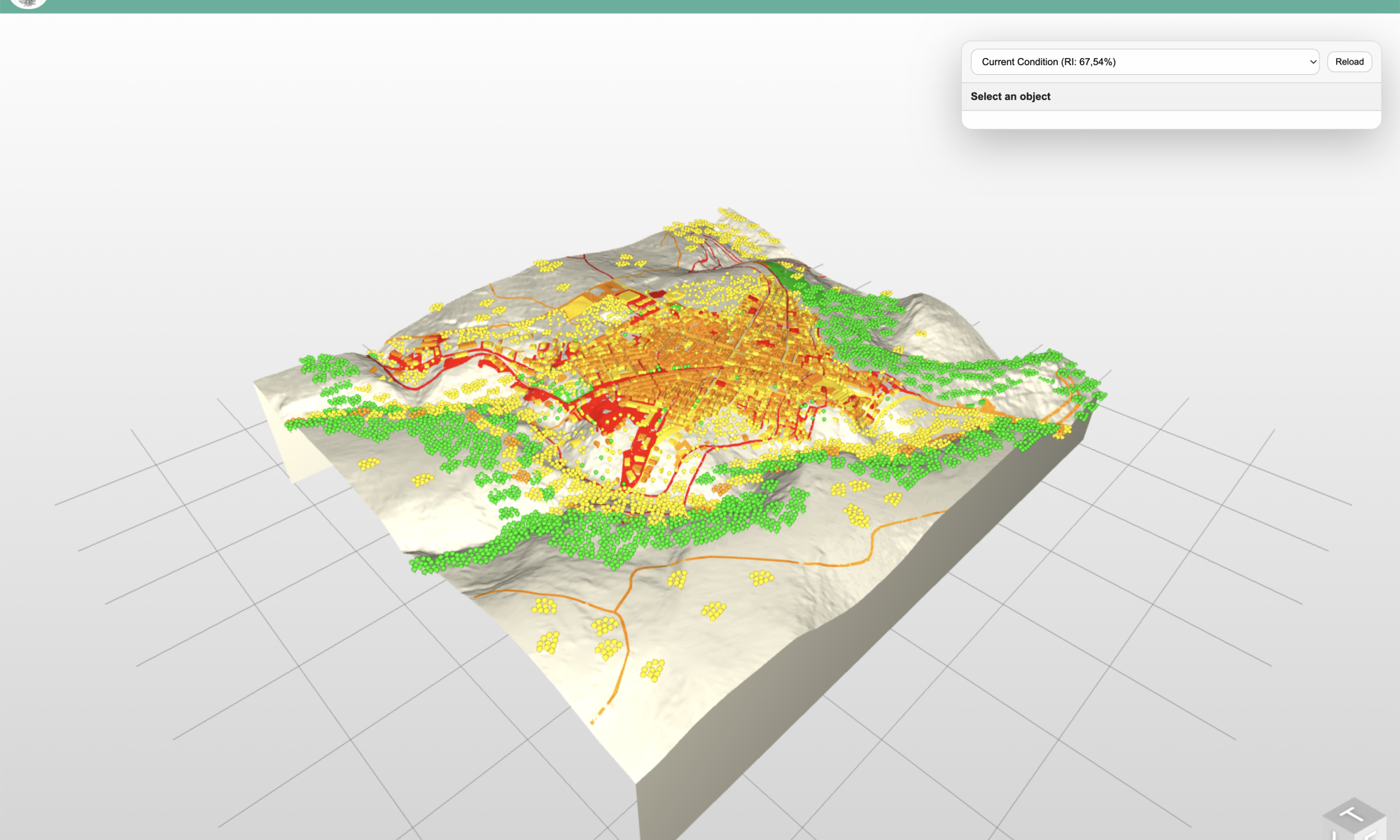
At the heart of this innovation is Ferla’s Digital Twin: a detailed three-dimensional replica that integrates territorial surveys, GIS layers, cadastral information, and environmental indicators. This is not just a 3D map, but a virtual laboratory connected to Kassandra’s “resilience engine.” The system allows for the calculation of the Kassandra Resilience Index, a metric that measures the city’s ability to withstand climate stress.
To make this data accessible to everyone, a dedicated Web Viewer has been created (watch it in action here). This intuitive interface allows local stakeholders to explore the urban model, visualize resilience maps, and, most importantly, compare different intervention scenarios before spending a single euro on the ground.
A key element of the system is the management of Nature-based Solutions (NBS). The URWAN NBS Catalogue has been transformed into a parametric library where each solution (such as green roofs or sustainable drainage systems) acts as a digital “building block” carrying data on construction costs, maintenance, and environmental benefits. Using the NBS Tile Cost Calculator, the Ferla administration can assemble customized scenarios and instantly evaluate the return on investment and the gain in resilience compared to traditional “grey” concrete infrastructure.
Ferla is not alone on this journey. The same approach has been successfully applied to the pilot cities of Ptuj (Slovenia) and Sarajevo (Bosnia and Herzegovina), creating a Mediterranean network of urban resilience.
For communities like Ferla, these tools represent the opportunity to make evidence-based choices, prioritizing investments that protect the territory and improve the quality of life for citizens in the face of tomorrow’s challenges